
Ever wondered where your friend disappeared to during that last group outing? Or maybe you’re just trying to keep tabs on your adventurous teenager? With the power of an iPhone in hand, finding someone’s location has never been easier—or sneakier!
Understanding Location Sharing on iPhone
Location sharing on an iPhone enables users to share their real-time location with others. Various features facilitate this process, enhancing both safety and communication.
What Is Location Sharing?
Location sharing refers to the ability to share geographic coordinates with selected contacts. This feature can be accessed through apps like Apple Maps or Find My. Users can choose to share their location temporarily or indefinitely, granting others access to their whereabouts. Privacy settings control how much detail others see, ensuring users feel secure while sharing.
Why Would You Want to Check Someone’s Location?
The reasons for checking someone’s location are diverse. Parents might want to monitor their children’s safety during outings. Friends often check on each other when separated in crowded areas. This capability supports coordination for events or helps confirm arrival times. Businesses may utilize location sharing to manage employees working remotely or in the field. Checking someone’s location fosters peace of mind, contextualizing social interactions and enhancing personal security.
Methods to Check Someone’s Location on iPhone
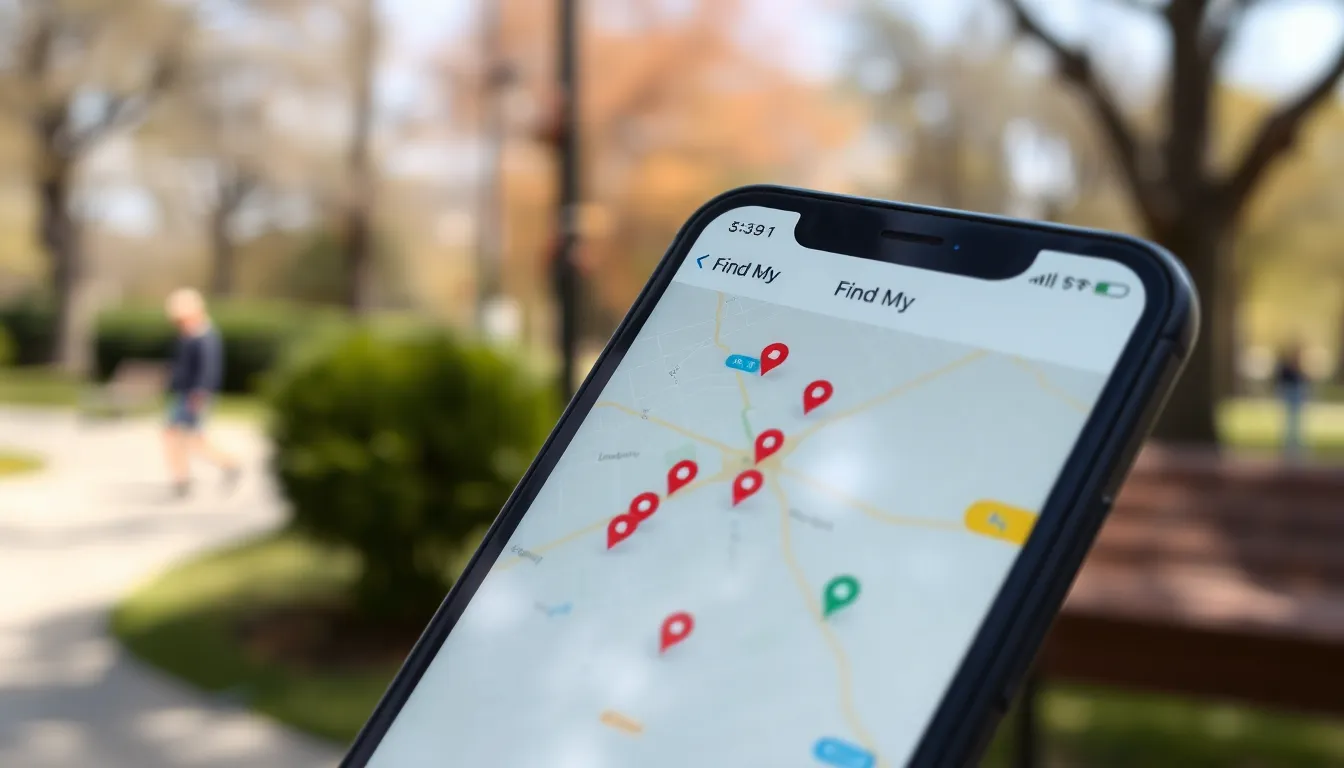
Tracking someone’s location on an iPhone can occur through built-in features and third-party apps. These methods offer various options for those who want to maintain communication and safety.
Using Built-in Features
Apple provides built-in features for location tracking. The Find My app allows users to share their location with friends and family. Users must enable location sharing in their settings. Once activated, contacts can be located in real-time. Additionally, iMessage allows users to share their current location directly within conversations. Activating this feature enables users to send a pinpoint of their location instantly. Privacy settings ensure the chosen contacts only see location data when sharing is enabled.
Third-party Apps
Numerous third-party apps facilitate location tracking for iPhone users. Life360 provides a family locator service, allowing users to create private circles for location sharing. User consent is essential to join a circle. Google Maps also offers location sharing, enabling users to share their live whereabouts with selected contacts. Setting up the feature only takes a few taps. Furthermore, Glympse offers temporary location sharing, useful for coordinating meetups without long-term commitments. Each app presents unique features tailored for specific tracking needs.
Steps for Using Built-in Features
Tracking someone’s location on an iPhone utilizes built-in features that promote real-time sharing while prioritizing privacy. Users can access the Find My app and Family Sharing options to enhance their location tracking experience.
Using Find My App
Find My app allows users to track friends and family easily. Open the app, tap on “People,” and select the contact to view their location. Users must grant permission for this access, ensuring privacy settings are intact. Sharing can occur temporarily or indefinitely, based on user preferences. Additionally, notifications can alert users when contacts share their location with them. It’s essential to note that both parties need Apple devices to utilize this feature fully.
Using Family Sharing
Family Sharing provides another avenue for location tracking among family members. This feature enables users to create a family group, allowing every member to share their location automatically. To set up Family Sharing, go to Settings, tap on the user’s name, and select “Set Up Family Sharing.” After that, invite family members to join. Members can view locations in the Find My app, reinforcing a sense of connection and security within families.
Using Third-party Apps
Tracking someone’s location through third-party apps offers additional features beyond built-in options. These applications often customize location-sharing experiences based on individual preferences.
Popular Location Tracking Apps
Life360 provides comprehensive family safety features, including driving reports and emergency alerts. Google Maps enables users to share live locations with friends for easy meetups. Glympse lets individuals share their whereabouts for a set time, ideal for coordinating plans. Find My Friends is another option that allows continuous tracking within a selected group. These apps cater to diverse needs, from family safety to casual sharing.
How to Use These Apps Safely
Using location tracking apps safely requires attention to privacy settings. Users should always check permissions before sharing their locations. Limiting shared access to trusted contacts enhances security. Setting time limits on location sharing with apps like Glympse adds an extra layer of control. Regularly reviewing the permissions granted to apps helps maintain privacy. Communicating openly with friends and family about sharing intentions ensures everyone’s comfort with the arrangement.
Privacy Considerations
As location tracking technologies advance, awareness of privacy implications becomes crucial. Users often assume tracking someone’s location through an iPhone is harmless, though several factors warrant attention.
Legal Implications
Tracking someone’s location without consent can lead to serious legal repercussions. Various laws govern privacy rights, and unauthorized tracking may violate these regulations. Specific jurisdictions, such as California, enforce strict anti-stalking laws, which can classify unauthorized location tracking as a criminal offense. Individuals must seek permission before using apps and features that allow location sharing. Personal accountability remains essential to ensure compliance with local laws.
Ethical Considerations
Ethical concerns accompany the use of location tracking. Trust forms the foundation of relationships, and violation through secretive tracking erodes that trust. Clear communication about intentions is vital to maintaining healthy relationships. Users are encouraged to consider how they would feel if their location were shared without consent. Respecting others’ autonomy and privacy fosters positive interactions, preventing potential conflicts. Awareness and ethical use promote a responsible approach to location tracking while preserving personal bonds.
Location tracking on an iPhone offers a practical solution for enhancing safety and communication. With tools like the Find My app and various third-party applications, users can easily share their whereabouts with trusted contacts. This technology not only aids in coordinating meetups but also provides peace of mind for parents monitoring their children’s activities.
However, it’s crucial to approach location sharing responsibly. Respecting privacy and obtaining consent ensures that everyone feels comfortable with the arrangement. By fostering open communication and understanding the ethical implications, users can enjoy the benefits of location tracking while maintaining trust in their relationships.