
In a world that often feels like a game of Jenga, global governance steps in as the steady hand trying to keep everything from toppling over. With challenges like climate change, pandemics, and geopolitical tensions, it’s clear that countries can’t just wing it anymore. They need a solid framework to collaborate and tackle issues that don’t recognize borders—like that one friend who shows up uninvited to every party.
But don’t let the serious tone fool you; global governance isn’t just about suits and ties. It’s about creating a cooperative environment where nations can work together, share resources, and maybe even throw in a few laughs along the way. As we dive into the intricacies of global governance, it becomes evident that this isn’t just a bureaucratic necessity; it’s a vital lifeline for a harmonious, thriving planet.
Understanding Global Governance
Global governance refers to the way international organizations, states, and other entities collaborate to address global challenges. This framework facilitates communication and action among various stakeholders. Countries participating in this process can enact policies benefiting the global community. Frameworks like the United Nations and World Trade Organization provide structures for these collaborative efforts.
When crises arise, such as climate change or pandemics, coordinated responses become vital. Nations with robust global governance structures are more effective at mobilizing resources. Sharing data and expertise enhances the response to global issues. Developed nations often assist developing countries, fostering an interconnected global community.
International agreements play a significant role in global governance. Treaties like the Paris Agreement showcase commitment to addressing climate change. Such agreements require cooperative efforts to achieve common goals. Member states monitor progress and hold each other accountable through regular assessments.
Emerging issues, including cyber threats and migration, also require attention. Global governance adapts to these challenges by promoting dialogue and collaboration. Countries can create frameworks that address cybersecurity, ensuring protective measures against potential threats. Similarly, comprehensive strategies can help manage migration patterns humanely and effectively.
In addition, global governance provides a platform for non-state actors. NGOs and private sector organizations contribute to international discussions, bringing innovative solutions. Their involvement enriches the decision-making process and encourages diverse perspectives.
Ultimately, the importance of global governance lies in its ability to create a cooperative atmosphere. By fostering collaboration and mutual understanding, global governance addresses pressing global challenges effectively. Together, nations can create a sustainable future, ensuring that the planet thrives for generations to come.
Key Institutions in Global Governance
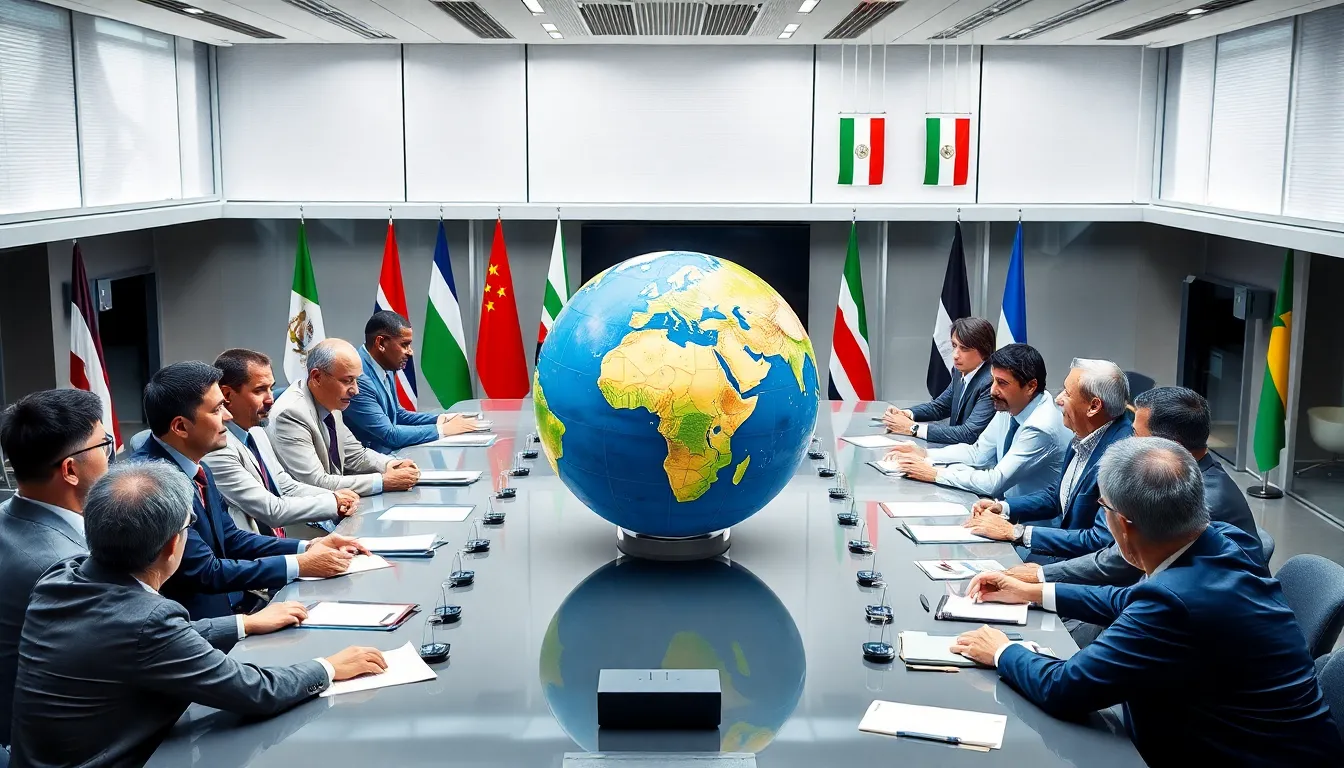
Global governance encompasses several key institutions that play vital roles in fostering international cooperation. These entities facilitate collaboration among nations to address pressing global challenges.
United Nations
The United Nations (UN) serves as the cornerstone of global governance. Established in 1945, this organization promotes peace and security while supporting human rights and sustainable development. Key bodies within the UN, such as the General Assembly and the Security Council, allow member states to discuss and resolve conflict issues. The UN also leads significant initiatives, including the Sustainable Development Goals (SDGs), aimed at addressing poverty, inequality, and environmental challenges. Through various agencies, like UNICEF and WHO, the UN coordinates responses to crises, providing essential assistance and resources.
World Trade Organization
The World Trade Organization (WTO) plays a crucial role in regulating international trade. Established in 1995, it aims to ensure trade flows smoothly and predictably among nations. The WTO provides a platform for negotiating trade agreements, resolving disputes, and monitoring national trade policies. By promoting free trade, the organization fosters economic growth and encourages global cooperation. Members benefit from guidelines that enhance trade relationships and reduce barriers. Efforts by the WTO to address issues like intellectual property rights and environmental sustainability further emphasize its importance in global governance.
Challenges Facing Global Governance
Global governance faces significant hurdles in today’s interconnected world. Addressing these challenges effectively requires understanding the nuances involved.
Sovereignty vs. Global Authority
Sovereignty often conflicts with the need for global authority. Countries prioritize their national interests, which sometimes hampers collaborative efforts. International agreements can struggle when nations perceive them as threats to autonomy. Additionally, decision-makers may resist ceding power to organizations like the United Nations. As a result, progress on shared issues can stall, leading to frustration among member states. Cooperation becomes more complex when national and global priorities clash.
Inequality and Representation
Inequality in representation poses challenges for global governance. Some nations wield disproportionate influence, skewing decision-making processes. This imbalance often leaves smaller or developing countries marginalized, limiting their impact on international policies. Voices from underrepresented regions may struggle to gain attention within major organizations. Resources and expertise are often concentrated in wealthier nations, complicating equitable collaboration. Building inclusive frameworks can promote diverse perspectives and improve outcomes, fostering fairness in the global governance landscape.
Innovations in Global Governance
Innovative approaches in global governance are essential for addressing complex global issues. Emerging trends highlight the integration of technology and collaborative efforts.
Technology and Digital Governance
Digital governance enhances transparency and accountability in international cooperation. Platforms that utilize artificial intelligence assist in data collection and analysis, leading to informed decision-making. Cybersecurity initiatives strengthen the protection of sensitive information, ensuring trust among nations. Collaborative tools facilitate real-time communication, allowing stakeholders to respond promptly to crises. The use of blockchain technology fosters secure transactions and improves monitoring of compliance with international agreements.
Environmental Governance Initiatives
Environmental governance initiatives play a crucial role in combatting climate change. Agreements like the Paris Agreement focus on reducing carbon emissions through collective action. International collaborations promote sustainable practices in resource management, benefiting both countries and the global community. Projects aimed at biodiversity conservation engage local and indigenous populations, ensuring inclusive representation. Furthermore, cross-border initiatives in renewable energy push for innovation and investment in sustainable technologies.
Global governance stands as a vital framework for nations to unite in the face of shared challenges. By fostering collaboration and resource-sharing, it creates opportunities for innovative solutions that benefit the global community. The integration of technology and diverse perspectives enhances decision-making and accountability, paving the way for more effective responses to crises.
As the world continues to evolve, the importance of inclusive and adaptive governance structures cannot be overstated. Addressing issues like climate change and geopolitical tensions requires a commitment to cooperation among all nations. With strong global governance, the path towards a sustainable and harmonious future becomes clearer, ensuring that future generations inherit a healthier planet.